Solid and Hazardous Waste Inspection
Solid & Hazardous Waste Inspection
A cradle-to-destination inspection method: identify each waste stream, verify its classification, examine handling and storage, then trace its movement to an authorized receiving facility.
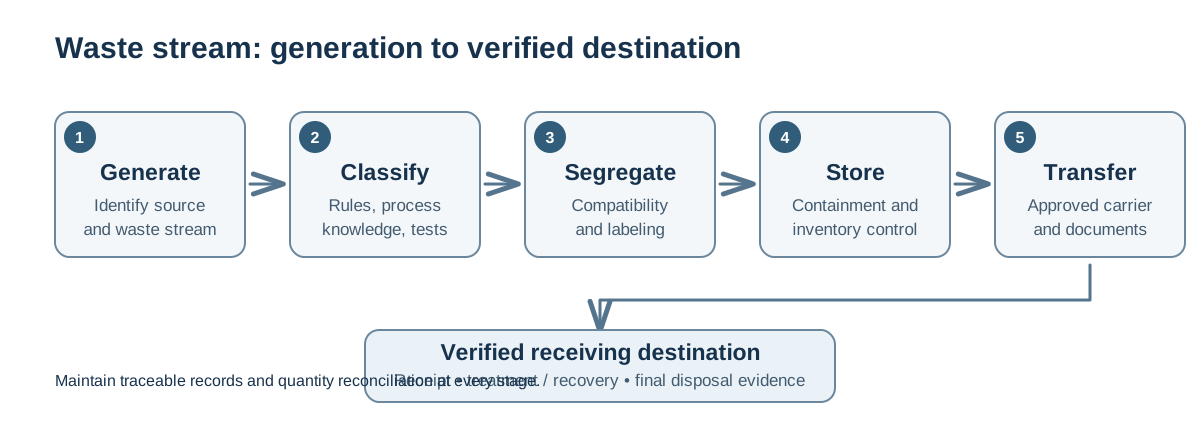
## 1. Map waste generation points Walk the production process in sequence and record wastes at the point where each is generated. Include: - Process residues, off-specification products, dust-collector residues and spent catalysts. - Used oils, oily rags, filters, batteries, lamps and maintenance wastes. - Empty chemical containers, laboratory chemicals and contaminated packaging. - Wastewater-treatment screenings, grit and sludge. - Scrap metal, cardboard, plastics, wood and general non-process waste.
For each stream, record its source process, physical form, approximate quantity or generation rate, storage location and current management route. Compare the walk-through with production, purchasing, maintenance and waste-transfer records to identify streams that may be missing from the waste inventory.
## 2. Verify classification and characterization Do not classify waste by colour, smell or appearance alone. Check the applicable legal waste list and classification rules, process knowledge, safety data sheets and representative analytical results where required. Relevant characteristics may include ignitability, corrosivity, reactivity, toxicity, infectious properties or other jurisdiction-specific criteria.
A useful waste profile records: - Waste-stream name, process origin and generating department. - Physical state and known constituents. - Applicable classification code and the basis for assigning it. - Characterization method, sampling date and laboratory report reference, if applicable. - Known incompatibilities and required handling precautions.
A laboratory result is only meaningful when the sampling plan, analytical method, detection limits and chain of custody are appropriate to the classification decision.
## 3. Inspect segregation and compatibility - Separate hazardous and non-hazardous streams and keep recoverable materials uncontaminated. - Check compatibility before co-storage; consult chemical compatibility information rather than relying on container proximity. - Segregate acids, alkalis, oxidizers, flammables, reactive substances and other incompatible groups as required. - Prevent rainwater, process liquids and unrelated wastes from entering waste containers. - Confirm that internal movement routes do not create avoidable spill, fire or exposure risks.
## 4. Inspect containers and temporary storage Examine container material and capacity against the waste properties. Check for corrosion, cracks, bulging, leakage, damaged closures and evidence of overfilling. Labels should identify the waste stream and relevant hazards in accordance with local requirements. Verify accumulation start dates and maximum storage periods where these are regulated.
For liquid wastes, inspect floors, bunds or secondary containment, drainage isolation and spill-response provisions. Confirm that containment capacity and design meet the applicable standard; do not assume that a bund is adequate simply because it is present. Review ventilation, fire protection, access control, weather protection and emergency equipment according to the hazards and local code.
## 5. Trace off-site transfer and final destination Select several waste streams and trace each one from generation to final receipt: 1. Internal waste log and quantity record. 2. Storage-area inventory and dispatch date. 3. Transporter identity, authorization and vehicle suitability where required. 4. Manifest, transfer note or equivalent movement document. 5. Receiving facility identity, authorization and accepted waste scope. 6. Receipt, weighbridge ticket, treatment certificate or final-destination evidence.
Reconcile quantities across generator, transporter and receiver records. Investigate unexplained differences, missing receipts, vague destination descriptions or contractors whose authorization does not cover the specific waste. A collection invoice alone does not demonstrate final treatment or disposal.
## 6. Wastewater-treatment sludge Identify the treatment process that generated the sludge, dewatering method, storage conditions, quantity and destination. Review characterization and classification records before accepting a proposed recovery or disposal route. Sludge from different industrial processes should not be treated as interchangeable.
## 7. Field inspection record | Field | What to document | |—|—| | Waste stream | Name, source process and physical state | | Classification | Code/category and evidence supporting it | | Quantity | Measured, weighed or clearly identified estimate | | Container | Type, condition, closure and label | | Storage | Location, segregation, containment and accumulation date | | Transfer | Date, transporter, movement document and quantity | | Destination | Receiving facility, authorization and receipt evidence | | Observation | Factual condition, photo/reference and follow-up needed |
## 8. Common inspection findings - Mixed or unidentified waste streams with no defensible classification basis. - Damaged, open, leaking or incompatible containers. - Missing labels, accumulation dates or inventory records. - Liquid waste stored without suitable spill containment. - Waste stored in a way that blocks drains, exits or emergency access. - Transfer documents that do not reconcile with inventory or receiver receipts. - Contractor or destination authorization not verified for the waste concerned.
## 9. Illustrative field observation Observation: During the site walkthrough, two unlabelled drums containing liquid residues were observed in the maintenance storage area. One drum had visible staining around its lower rim. No waste inventory entry or recent inspection record was available at the time of the visit.
Evidence to obtain: Photographs with location reference, drum identification, process origin, safety information, waste inventory, spill history and classification records. Do not conclude that the material is hazardous or declare a legal violation until its identity, applicable requirement and supporting evidence have been verified.
## 10. Close-out and safety Record immediate containment or isolation needs and notify the responsible facility representative through the established procedure. Do not open unknown containers, mix materials, handle leaking drums or collect samples without a task-specific risk assessment, trained personnel and suitable PPE. Follow site emergency procedures for spills, fire or exposure.
This is a generic technical guide, not an official Egyptian Ministry of Environment form. Waste codes, storage limits, transporter approvals, sampling methods and destination requirements must be checked against current legislation, permits and the competent authority.